Architecture& history
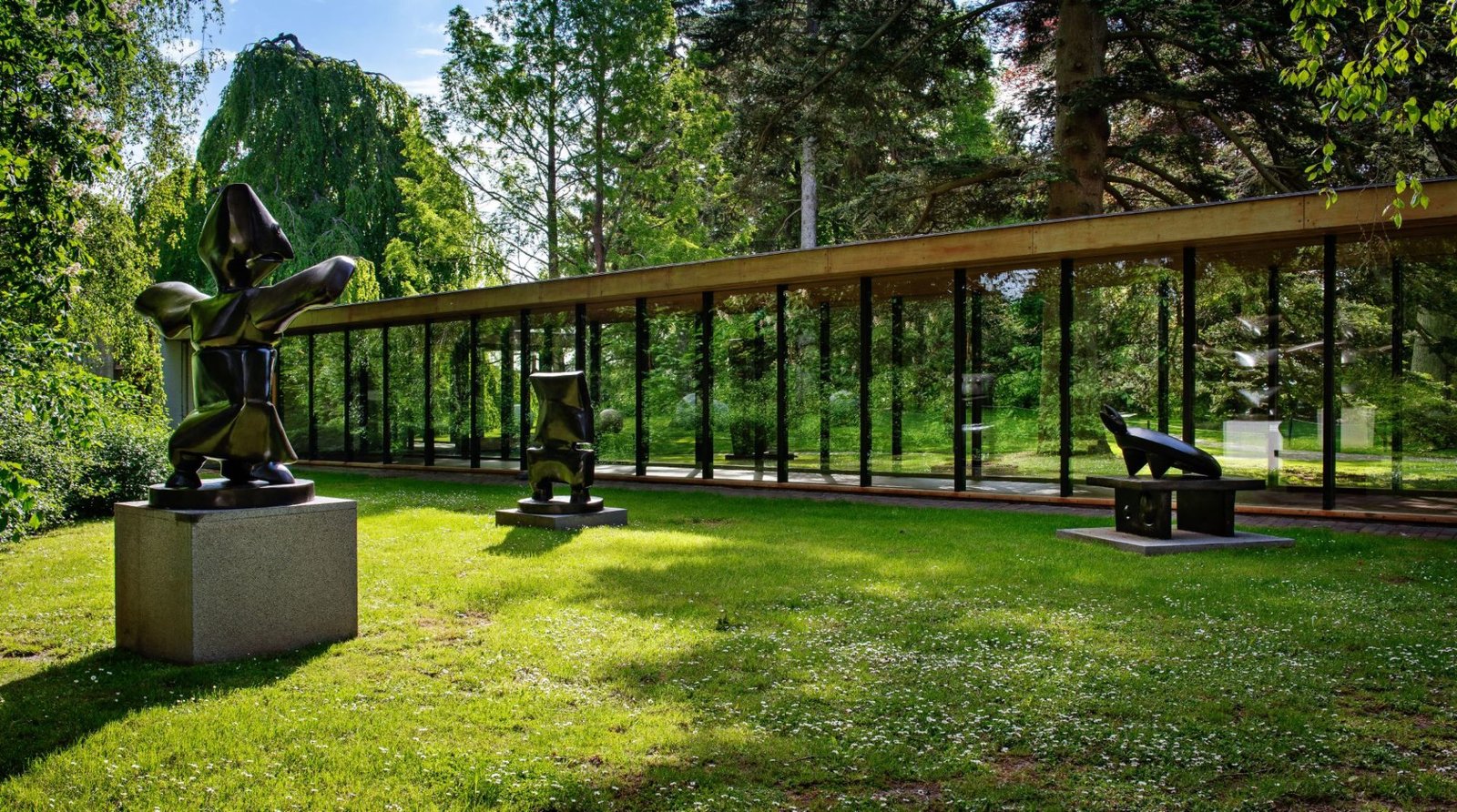
Louisiana is considered a major work of Danish modernist architecture. In the well-balanced style of the late 1950’s discreet modernism, the museum presents itself as a horizontal and understated building complex that fits gracefully and intimately into the landscape.
It is precisely the unpretentious aspect of Louisiana’s architecture that strikes the eye on the first visit. In the mid-50s, when the museum’s founder, Knud W. Jensen, asked the architects Jørgen Bo and Wilhelm Wohlert to build a museum based on the old villa, their basic conception was to link the architecture with the natural surroundings.
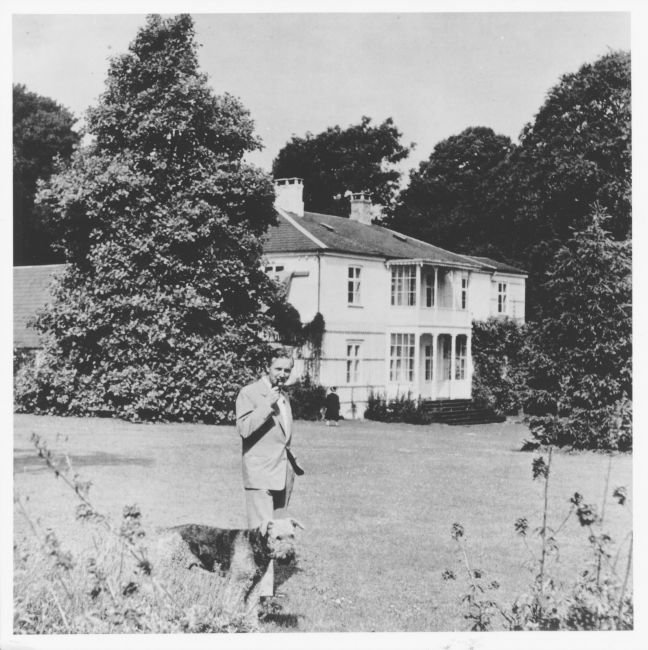
Louisiana’s founder, Knud W. Jensen, wanted to create a museum where Danes would have a chance to actually see modern art, which until this point (the 1950s) was hardly represented in any of the other Danish museums.
Story of the museum
sueven stages
Louisiana has expanded considerably since opening in 1958. All seven extensions and alterations have been carried out by the architects Bo and Wohlert – supplemented by architect Claus Wohlert on the projects from the East Wing onwards.
It has been possible to maintain the original plan and fit the gradually larger Louisiana perfectly into the terrain, the trees, the lawns, and the rest. The museum thus still appears an integrated whole in which the interplay among architecture, the Park, and nature create a special resonance for Louisiana visitors.
A covered stroll
When Knud W. Jensen took over the property in 1955, he imagined at first that the new museum would consist of the Old Villa and a separate exhibition pavilion at the edge of the cliff facing the Sound. But in his collaboration with the two architects Jørgen Bo and Vilhelm Wohlert, they conceived of a plan in which the buildings would be connected in such a way that visitors would feel as though they were on a “covered stroll” through the park.
“It was an ideal location for a museum,” wrote Knud W. Jensen upon the museum’s fortieth anniversary, ”but the lot made its own demands and became in a sense our employer, making the final decisions about where the buildings should stand and where the sculptures should be placed.”
“
It was an ideal location for a museum
Knud W. Jensen (1916-2000) Louisiana’s founder
The construction began in mid-1956 and lasted until the museum’s opening in 1958. Bo and Wohlert’s original design idiom featured long whitewashed walls, exposed structures, laminated wooden ceilings, and deep-red tiled floors. And then of course the large glass panels that open into the surroundings and contribute to a unique architectural lightness.
The two architects took their inspiration from both sides of the Pacific. Wohlert had studied at the University of California at Berkeley, where he had the opportunity to become acquainted with the so-called Bay Area architecture of the wooden houses surrounding the San Francisco Bay. But Louisiana also has clear references to the traditional simplicity of Japanese building style, which the architects succeeded in transplanting elegantly in a Danish setting. It has been said that from the beginning two factors were critical to Louisiana’s architecture: coherence and gentleness.
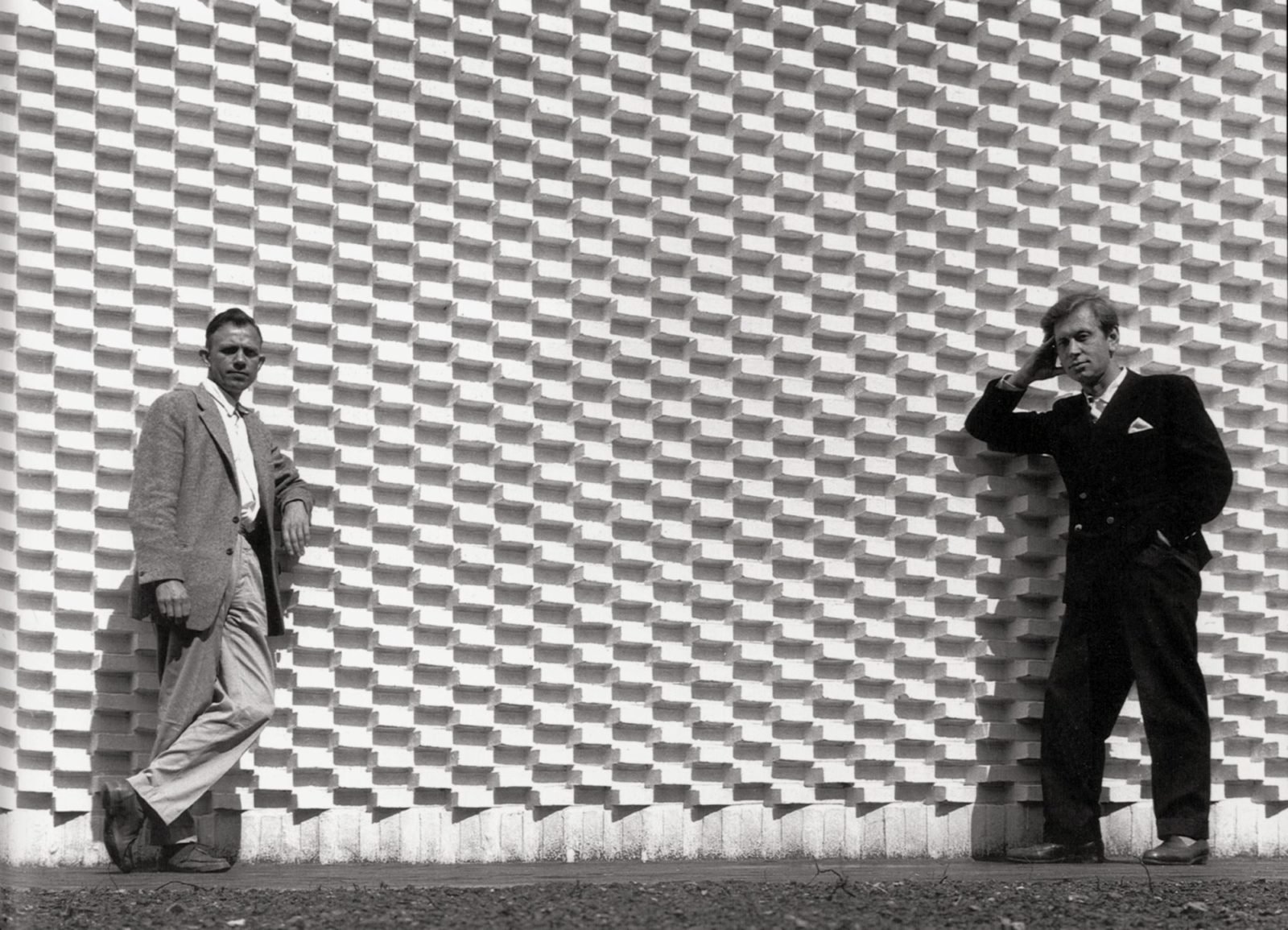
JØRGEN BO (1919-99).Graduated from the School of Architecture at the Royal Danish Academy of Fine Arts in 1941, where he was appointed professor in 1960. In addition to the long-standing collaboration on the construction and expansion of Louisiana, he also designed with Vilhelm Wohlert the Danish Embassy in Brazil (1972-74) and the Art Museum in Bochum, Germany (1978-83), among many other buildings. With Karen and Ebbe Clemmensen, he built the Blågård Seminary in Gladsaxe, Denmark (1962-66), and with Anders Hegelund as associate architect, IBM’s Danish headquarters in Lundtofte (1970-72). Jørgen Bo received many honors, including the Eckersberg Medal in 1959 and the C.F. Hansen Medal in 1983.
Vilhelm Wohlert (1920-2007).Studied at the School of Architecture at the Royal Danish Academy of Fine Arts under Kaare Klint. Graduated in 1944; professor of architecture from 1968 to 1986. As an independent architect, he completed a wide variety of assignments, including the renovation of the Ny Carlsberg Glyptotek museum (with Viggo Sten Moller, 1956-58). Afterward, he became the permanent architect for Ny Carlsberg Foundation. In addition to their collaboration on Louisiana with Jørgen Bo, the two partners also built Kirstine Park in Hørsholm and Piniehøj in Rungsted. Wohlert designed several churches and – with the Exners – also Frederik IX’s burial site at Roskilde Cathedral. He played a key role in efforts to preserve traditional Danish building culture, and he managed numerous restorations, including Christian VII’s Palace at Amalienborg and the Copenhagen Cathedral. Wohlert was awarded the Eckersberg Medal and Træprisen (for Louisiana), both in 1958, and the C.F. Hansen Medal in 1979, among other honors.
BO & WOHLERT
“
Each step should feel like an experience
Wilhelm Wohlert
NORMAN FOSTER ON LOUISIANA
In 2023, the Louisiana Channel interviewed the renowned British architect and designer Norman Foster. During the interview, Foster, who is regarded as one of the greatest architects of his time, discussed his connection to the Louisiana Museum and how he has drawn inspiration from its iconic architecture. The full interview can be viewed at channel.louisiana.dk.
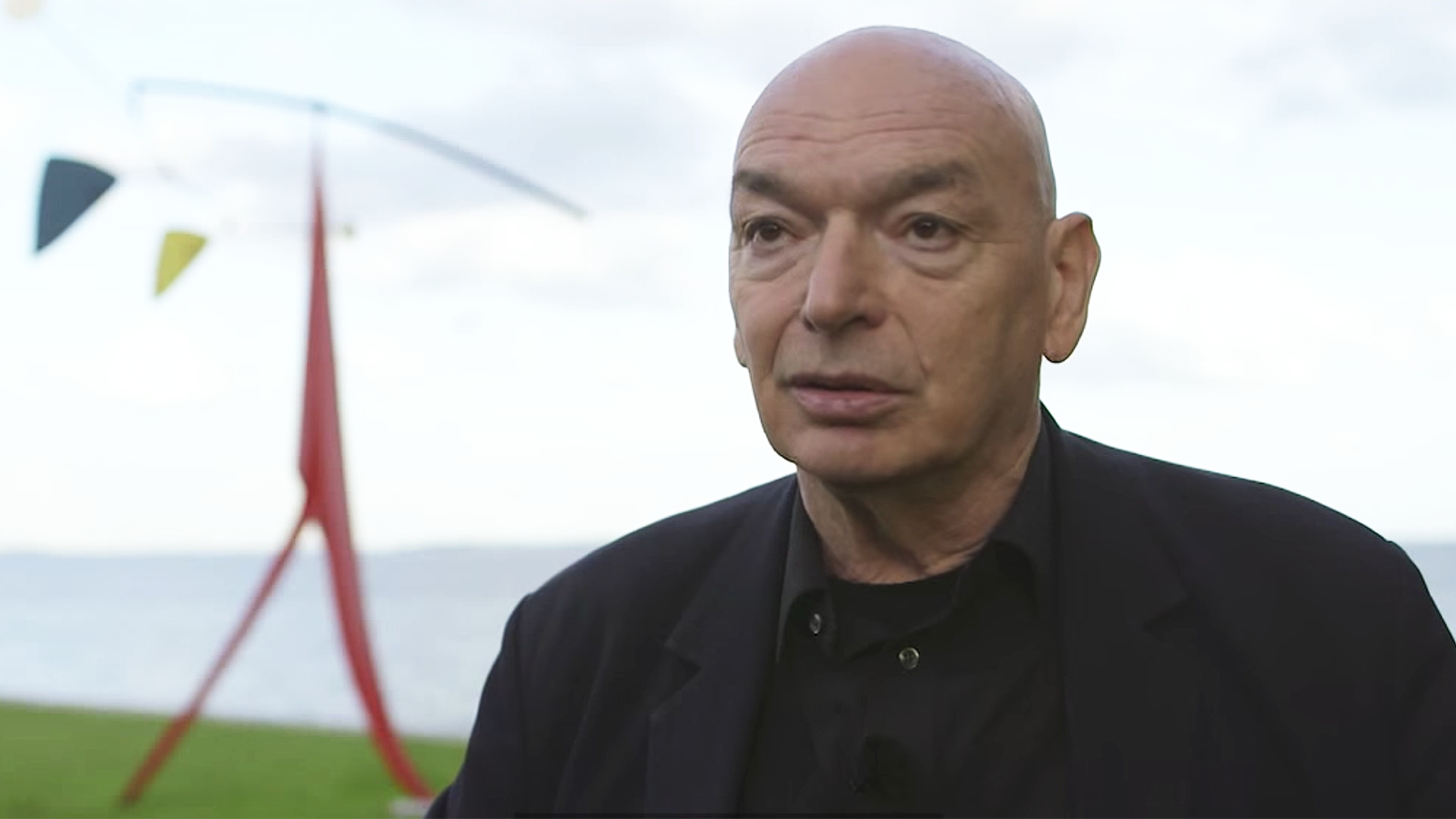
JEAN NOUVEL ON LOUISIANA
In 2005 french starchitect Jean Nouvel and the Louisiana Museum came together to collaborate on the exhibition ‘Jean Nouvel – Louisiana Manifesto’.
Ten years on, Nouvel has revisited the museum and shares his thoughts and passion about a place where architecture, nature, and art belong together. “At Louisiana,” says Nouvel, “each thing is directly felt, and everything is at home”.